Dark academia bedroom and interior design - colors, materials, furniture
The style lives on specifics: which greens hold up under a north window, which woods read old, how deep a bookshelf has to be. All of that below, on a photo of your own room.
Interior design
What dark academia interior design actually is
Dark academia borrows from the old university room: a library wall, a heavy desk, oil portraits, worn leather. Three things carry it - a warm dark palette in matte finishes, aged natural materials, and light from lamps rather than the ceiling.
The trap is treating it as a shopping list. A globe and a stack of hardcovers on white walls under a 4000K bulb is not the style; a plain room in the right green, lit by two lamps at 2700K, already is. The generator itself is covered on the /en/interior-design hub.
Want it exact? Build the project in the 3D editor
A Sims-like builder in your browser: walls, roof, windows, door, porch. Try finish materials (siding, stucco, brick), color and style. The result is a photorealistic AI render of your own 3D scene.
Dark academia colors and how they behave in real light
Five families carry the style, plus navy where green feels heavy. LRV is the light reflectance value on a paint chip - the lower it is, the more light the wall swallows. Undertone decides whether the color survives the room.
| Color family | LRV | How it behaves | Where to use it |
|---|---|---|---|
| Forest and hunter green | 6-14 | Yellow-based greens stay green under lamplight; gray-based ones go cold after dark | Whole rooms, and the library wall |
| Oxblood and burgundy | 5-12 | Reads brown in weak north light, turns genuinely red under warm bulbs | A study wall, an alcove, the headboard wall |
| Chocolate and walnut brown | 5-10 | The most forgiving dark, since it never turns cold; goes purple beside blue-gray | Whole rooms, trim, built-in shelving |
| Ink black and charcoal | 3-8 | A brown or green undertone stays soft; neutral black shows every dent in plaster | Ceilings, shelf backs, rooms with no daylight |
| Parchment, camel, mustard | 30-70 depending on the shade | The light half of the palette, and why a dark room does not read as a box | Low ceilings, lampshades, bedding, upholstery |
Sheen matters as much as color
Use matte or flat on dark walls. Gloss turns a deep color into a mirror showing every ripple in the drywall and every lamp reflection. Keep satin for trim and doors, which get touched.
Dark academia colors for small rooms
The rule that dark colors shrink a room is half wrong, and the wrong half is the useful one. A dark room does not read smaller, it reads boundless; you stop seeing where the walls end. What goes wrong is contrast, not darkness.
One dark wall against three light ones draws a hard line, and the eye measures the room against it. Carry the color across walls, trim, doors and ceiling and the corners disappear, which is why small studies painted out in one green feel larger than they measure.
- Same color and matte sheen on walls and ceiling, under about 120 sq ft
- Paint the trim too - white trim is the line that gives the size away
- Under an 8 ft ceiling, a shade lighter overhead is a fair trade
Lighting, the part most of these rooms get wrong
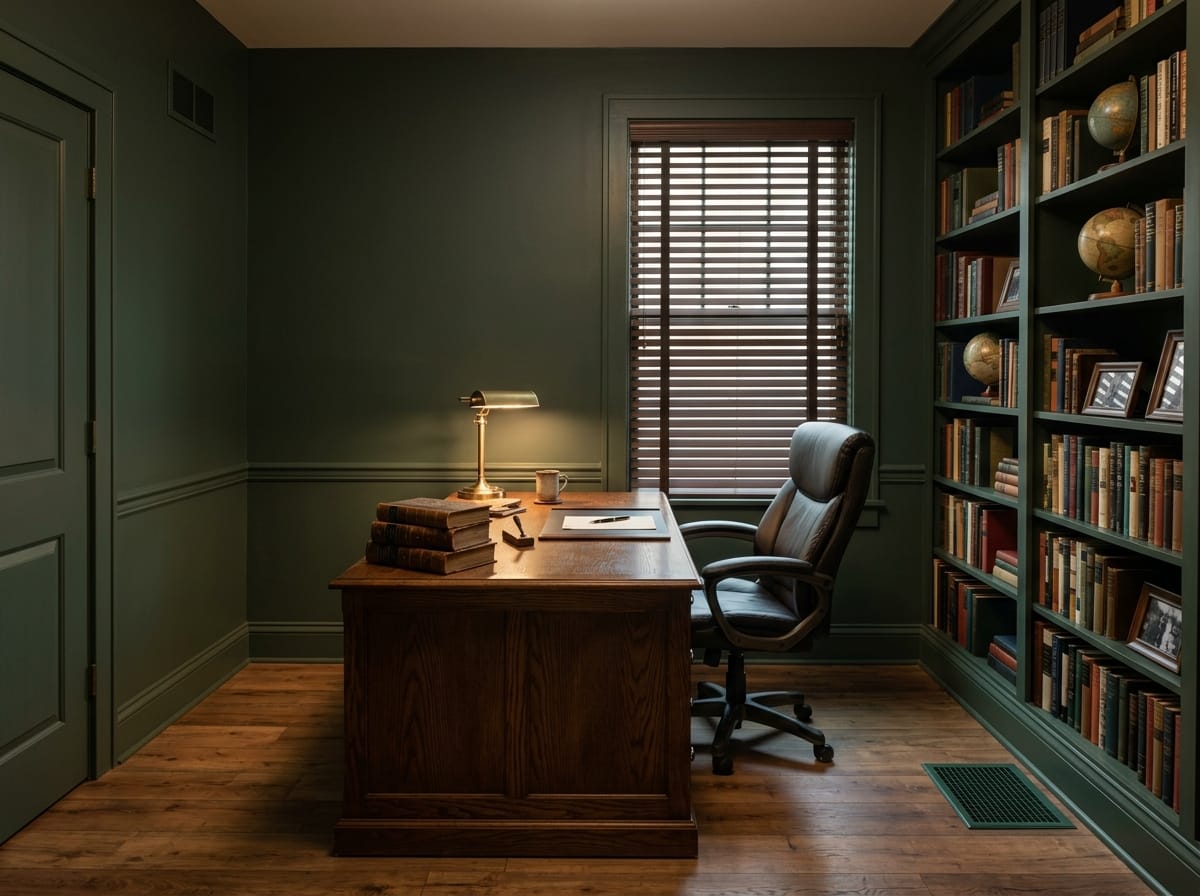
The style was formed in rooms lit by fire and filament. One bright ceiling fixture undoes it instantly: it flattens the color, kills the shadows and makes walnut look like laminate. Plan pools of light at different heights, all dimmable.
Finishes stay warm - antique or unlacquered brass, aged bronze, blackened steel. Unlacquered brass darkens unevenly over a few years, which is the point.
- 1
Table lamps as the main source
Two or three around the room at 2700K, with fabric, parchment or glass shades. A green banker's shade on the desk is the one cliche worth keeping.
- 2
Sconces and picture lights
Candle-style sconces beside a bookcase or headboard, plus a picture light over framed art. A picture light is what makes a print look like a painting.
- 3
Ceiling light, dimmed and never alone
A milk-glass schoolhouse pendant or a plain brass fixture, run low and used only when you need to find something. Candles on the mantel finish the job; flickering LED ones read as plastic.
Bulb temperature is not a detail
Anything at 3500K or above turns a dark academia room gray-green and sour. Stay at 2700K throughout, 2400K for accent lamps, and put every source on a dimmer.
Wood, leather, brass and stone
Materials decide whether the room reads antique or costumed. The common thread: each looks better after a decade.
- Walnut — The default. Naturally dark brown, quiet straight grain, no stain needed. Expensive new, cheap secondhand in mid-century pieces that fit once you swap the pulls for brass.
- Mahogany and cherry — Both carry a red undertone that sits well beside oxblood. Cherry starts pale orange and deepens to red-brown over years of daylight, so judge it by what it will become.
- Quartersawn white oak — Cut across the rays, so the face shows the flecking of old library furniture. Fumed or dark-stained it goes gray-brown instead of orange, where plain red oak fails.
- Painted pine and poplar — The budget route for shelving. Painted out in the wall color at a matte sheen they pass; left orange-toned, nothing saves them.
- Leather with a patina — Cognac, oxblood or dark brown aniline, which absorbs and marks. Corrected-grain leather with a plastic finish never ages. One chair is enough.
- Brass, iron and stone — Unlacquered brass on hardware and lamps, blackened iron on brackets and a library ladder, a small slab of veined marble. Skip chrome and polished nickel.
Dark academia bedroom: color, light and materials
The bedroom is where most people apply the style first, and where it is easiest to overdo. This is about finish and atmosphere; bed placement, walkways and what fits at each size are handled at /interior-design/bedroom-design.
Either drench the whole room, or run the deep color across the headboard wall and the ceiling and leave the rest parchment. A dark lid overhead reads as calm, not small.
- Deep green, chocolate or ink on the walls, matte finish
- Panel molding or a picture rail 12-18 in below the ceiling
- Trim and door in the wall color, satin sheen
- Floor lighter than the walls: mid or dark wood
Choosing a dark academia bed
The frame sets the tone before anything is dressed. Five that fit, from most to least demanding of ceiling height.
- Four-poster or canopy in dark wood — The strongest statement and the fussiest to place. Posts run 76-88 in tall, so it wants a 9 ft ceiling. Leave it bare or hang one linen panel; a full drape tips into a stage set.
- Tall wooden headboard, panel or arched — Walnut, mahogany or dark-stained oak, 48-60 in above the floor. The most reliable choice under an 8 ft ceiling, and the easiest to find used.
- Tufted velvet or leather headboard — Forest green, oxblood or deep brown. Softens a room already heavy on wood and absorbs sound over hard floors.
- Antique iron or brass frame — Victorian schoolroom rather than library, and visually the lightest - it suits a small bedroom where a wooden mass would swallow the floor.
- Low platform frame in walnut — The modern reading: keeps the wood and the color, drops the ornament. What makes the style work under an 8 ft ceiling.
Secondhand is not a compromise here
Wear is part of the look, so an estate-sale frame often beats a new one. US mattress sizes have been stable for decades - twin 38 x 75 in, full 54 x 75 in, queen 60 x 80 in, king 76 x 80 in - so an old frame usually still fits.
Dark academia bedding, layer by layer
Bedding is where the style is won cheaply. Aim for weight and matte texture: four fabrics in three related colors beat a matched set.
| Layer | Material | Color | Why |
|---|---|---|---|
| Sheets | Washed linen, or percale rather than sateen | Parchment, oatmeal, faded olive | Percale and linen are matte; sateen has a sheen that fights the room |
| Duvet or comforter | Linen, brushed cotton, cotton velvet in winter | Deep green, chocolate, charcoal, oxblood | The largest surface in the room, so it sets the temperature |
| Blanket over the foot | Wool: herringbone, plaid or a heavy throw | Camel, rust, forest, muted tartan | Reads old and adds the one pattern the bed needs |
| Quilt or coverlet | Cotton matelasse or a worn vintage quilt | Ivory, mustard, faded indigo | Breaks up a dark bed so it does not read as a slab |
| Pillows | Two euro, two sleeping, one lumbar in velvet | Mixed within one family | Odd textures at different scales; identical pillows look staged |
Dark academia bedroom furniture: what to look for
A short buying checklist. Nearly all of it can be found secondhand, and secondhand is better here.
A writing desk, not a computer desk
Walnut or mahogany, 42-54 in wide, with drawers and a wood or leather top. Even in a bedroom it does more for the style than any decor object.
A wardrobe instead of open storage
Dark wood doors, 22-24 in deep for hanging. Closed storage keeps the room quiet; exposed rails and plastic bins undo the mood instantly.
A tall, narrow chest of drawers
A 34-40 in highboy takes less wall than a wide dresser and leaves room for a bookcase. Swapping the pulls for antique brass changes its character cheaply.
Nightstands with a drawer and a shelf
24-28 in tall, so the top sits near mattress height. In a tight room a stack of books is the one improvised solution this style welcomes.
A wool rug with age in it
Faded Persian, Turkish, or plain wool in camel. Under a bed it should run 18-24 in past the sides. Bright new dyes pull these rooms off-style fastest.
Bookshelves, walls and framed art
The library wall is the load-bearing element of the style, and the part that is easy to get slightly wrong.
Shelf depth and span
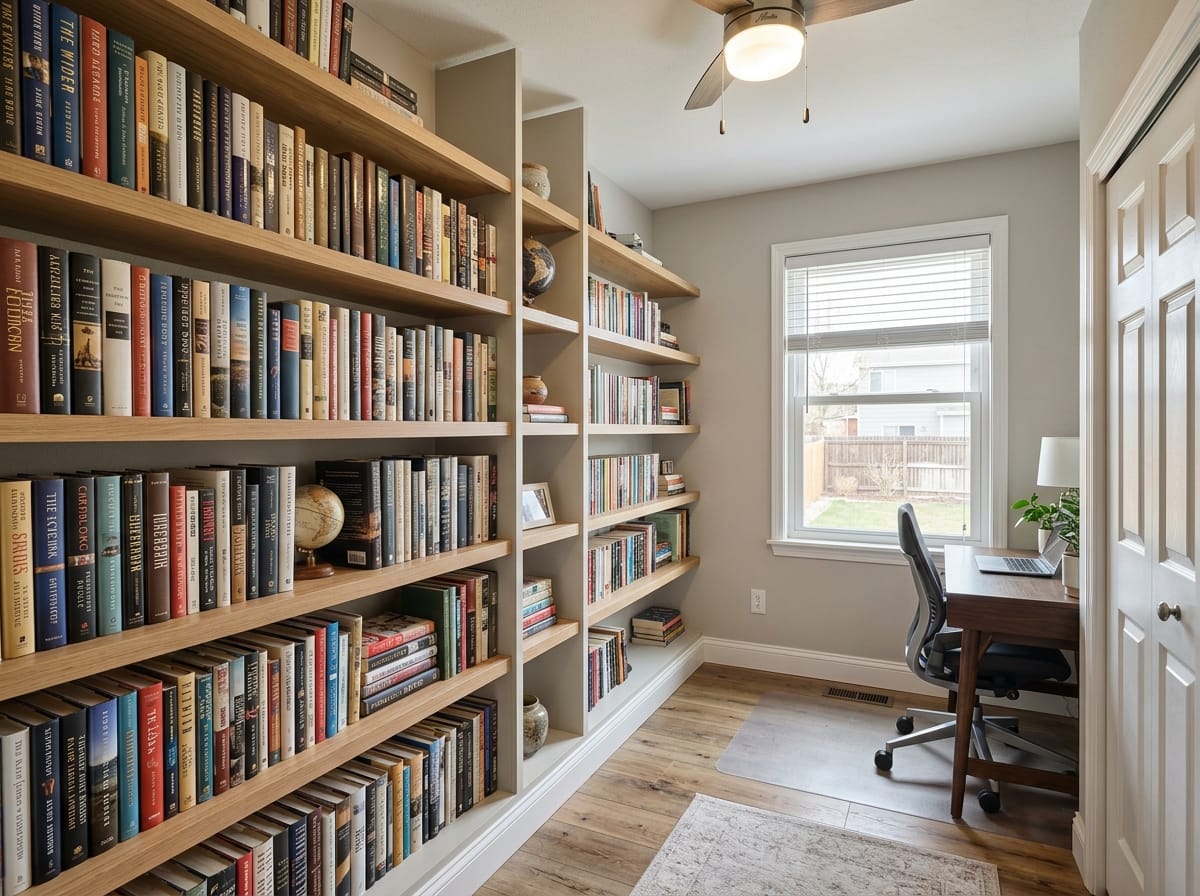
Hardcovers need 10-12 in of depth, paperbacks 8 in. Keep unsupported spans of 3/4 in shelving to about 30-32 in, or a full shelf bows within a couple of years.
Floor to ceiling, painted out
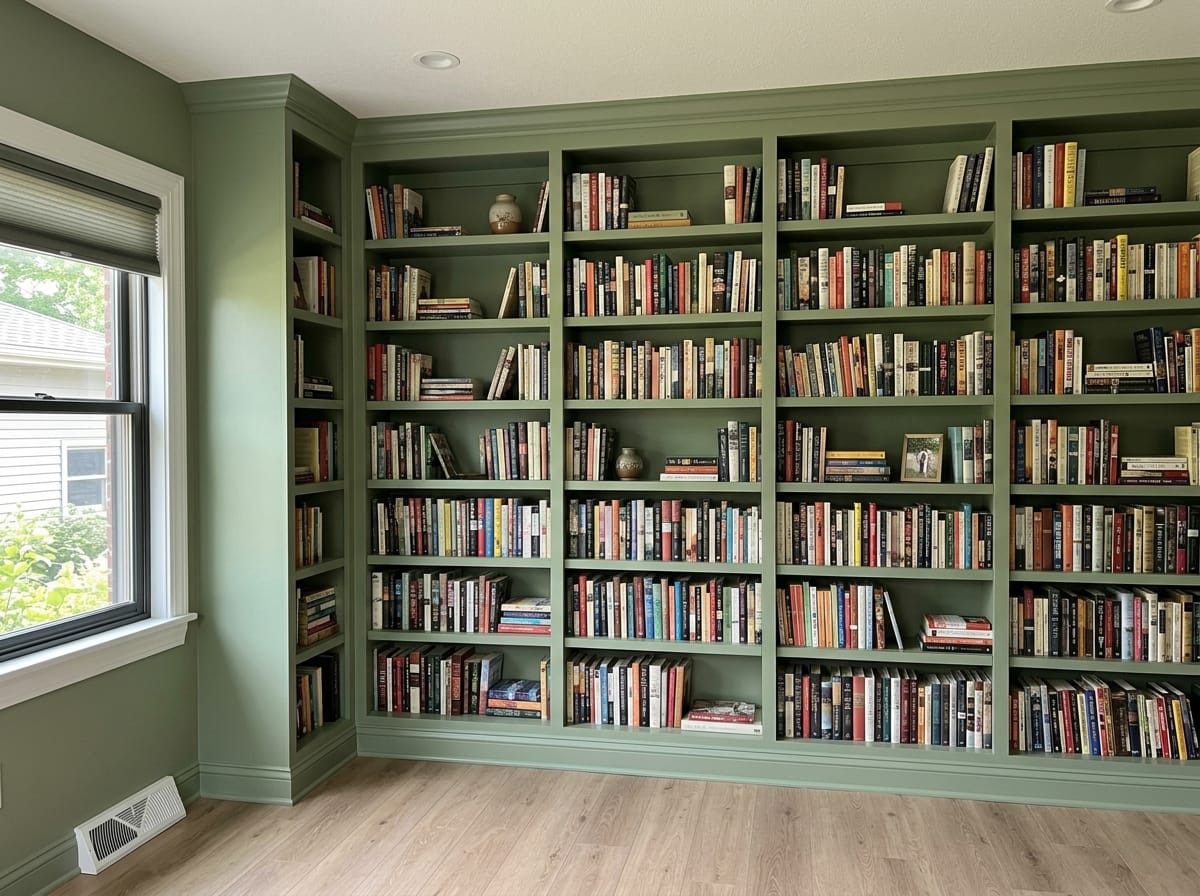
Run shelving the full height and paint the case and back panel in the wall color. Contrasting backs chop the wall up; matching ones leave only the books.
How to fill them
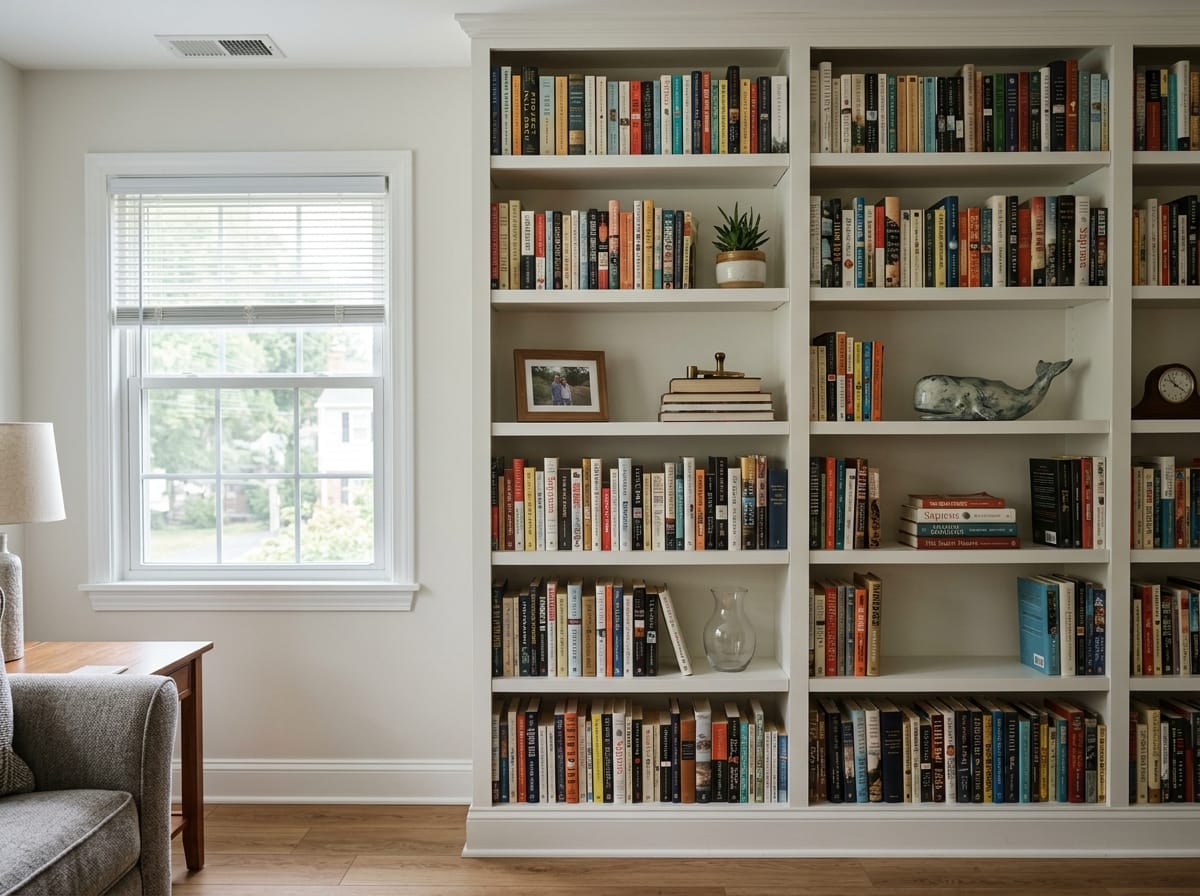
Roughly four parts books to one part object, spines out, mixed heights, some stacks flat. Leave two or three gaps - packed edge to edge looks like storage.
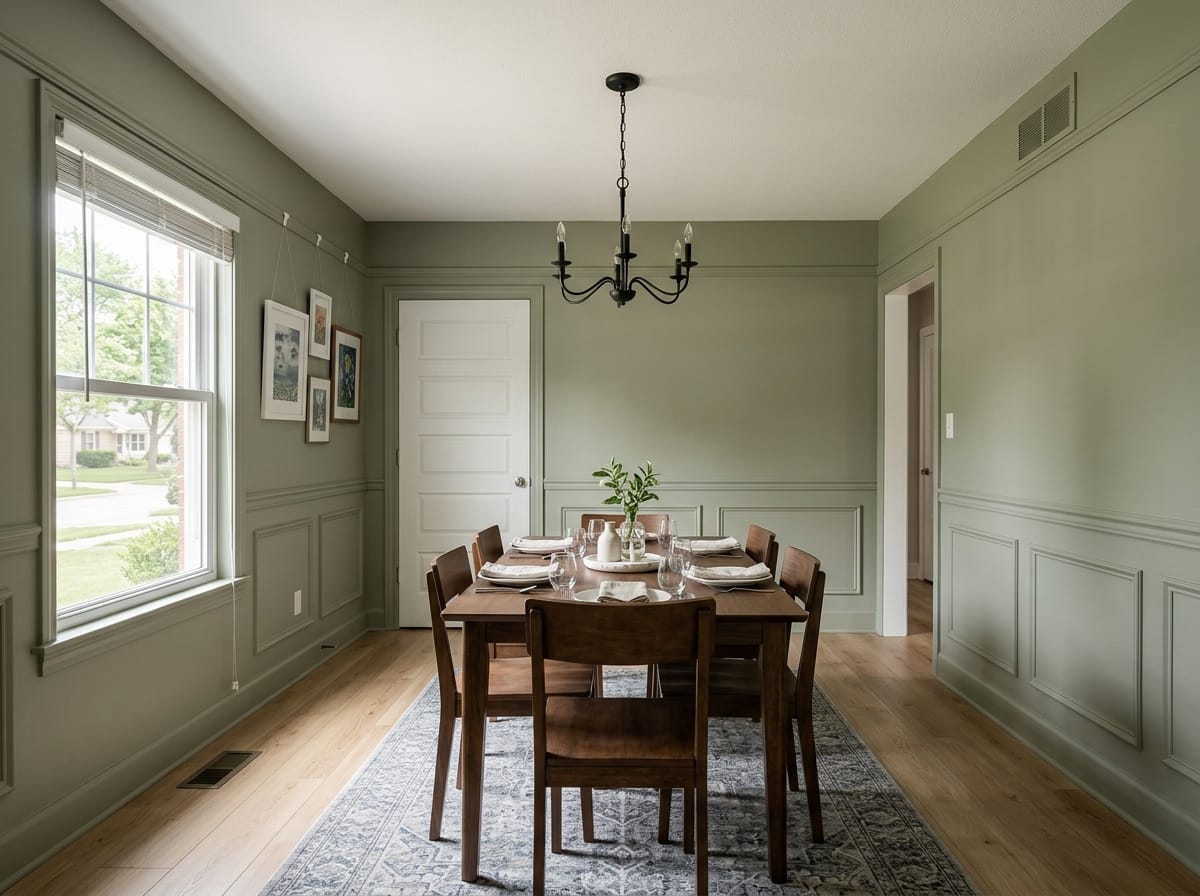
Molding and paneling
Picture rail, chair rail or applied panel molding, all in the wall color. In a plain rental, a picture rail 12-18 in below the ceiling is the cheapest way to add age.
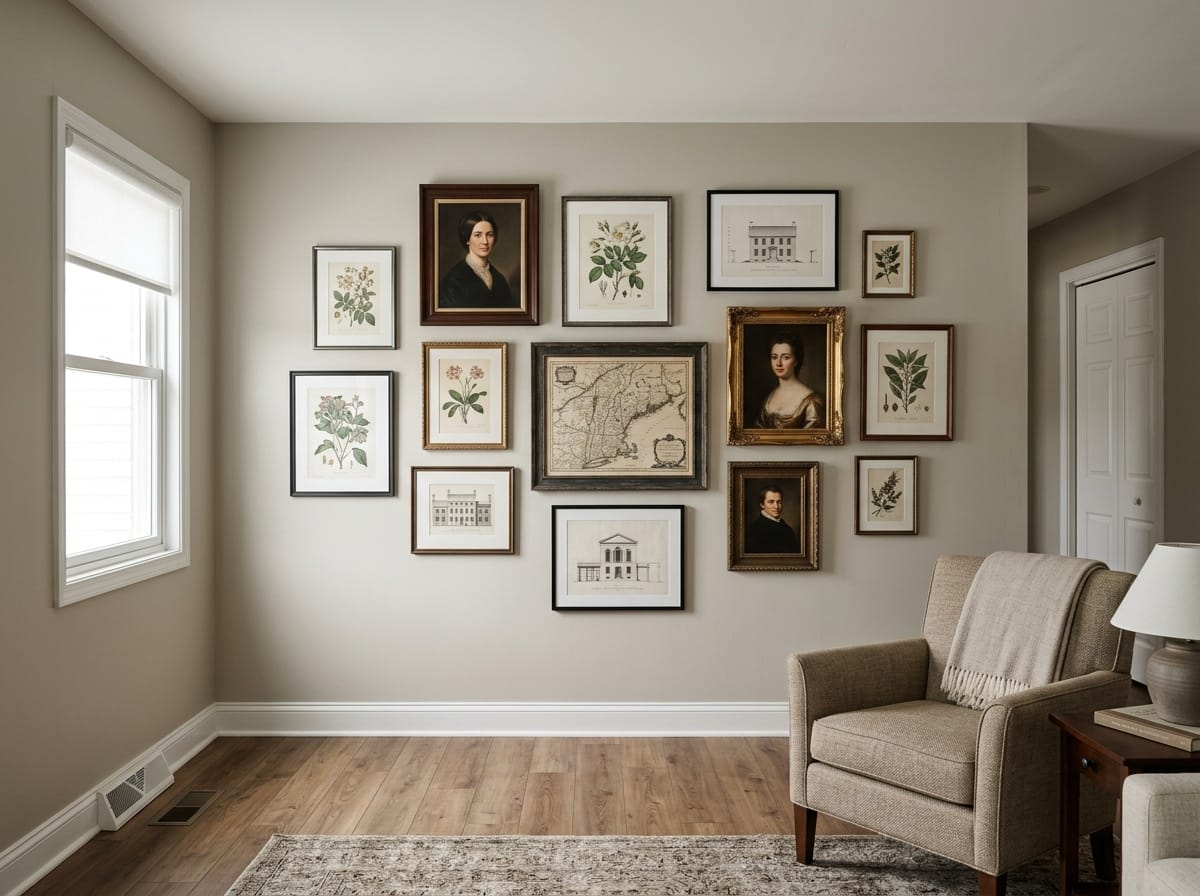
Art and frames
Oil-portrait reproductions, botanical plates, maps, architectural drawings. Gilt, dark wood or blackened metal frames, centered 57-60 in above the floor.
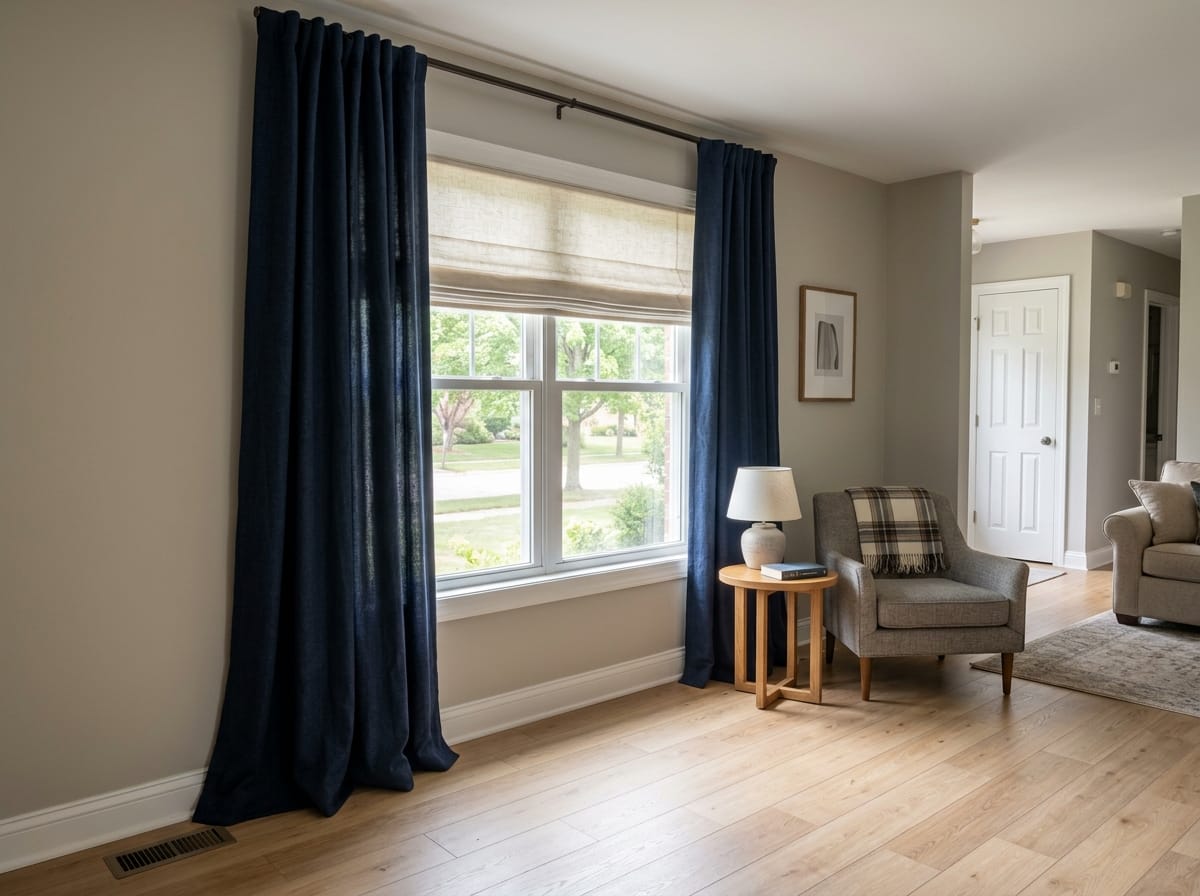
Windows
Heavy drapery in wool, velvet or linen, hung high and breaking at the floor. A lined Roman shade does the same job in less fabric.
Dark academia bedroom inspo: four directions
Model-generated reference frames from text prompts, not photographs of real projects. One palette at four levels of ornament.
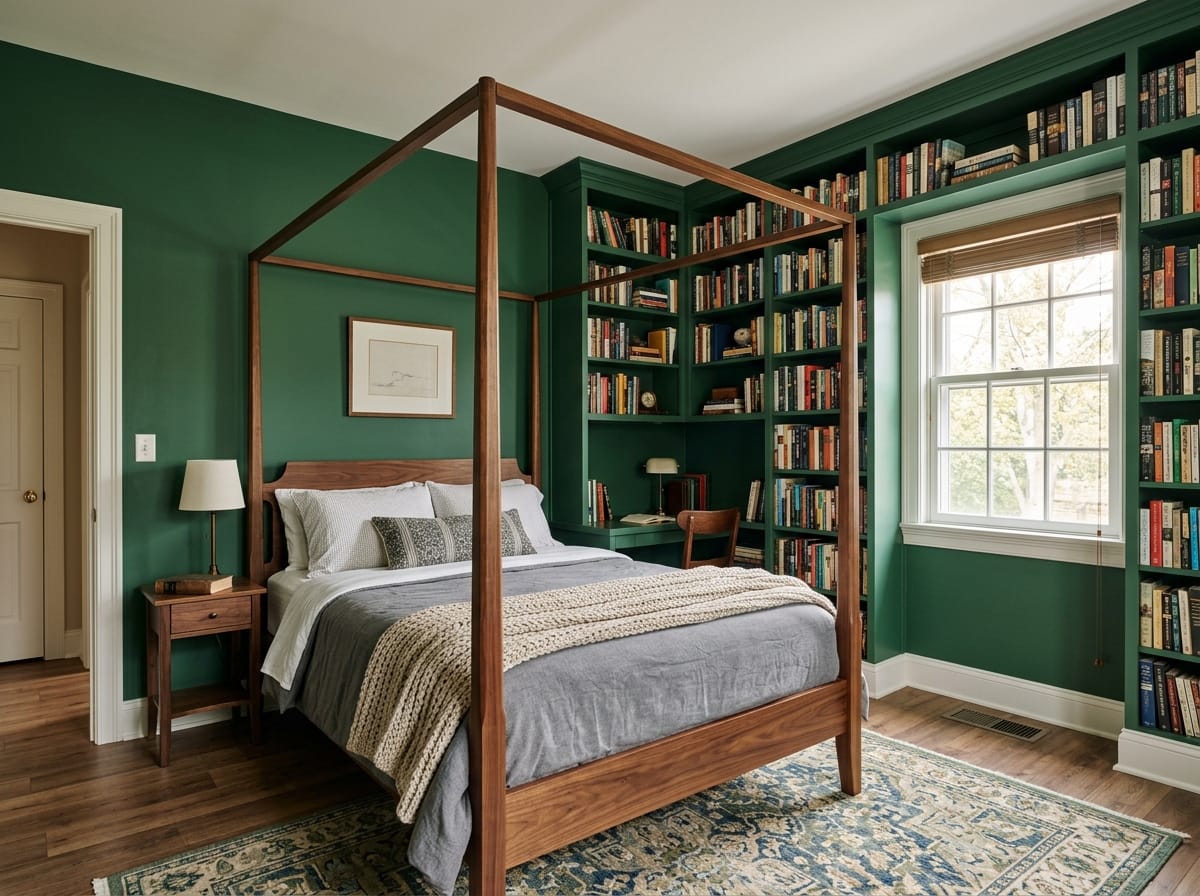
The classic study bedroom
Green drenched walls, a walnut four-poster, a full library wall. Wants a 9 ft ceiling.
Make one like this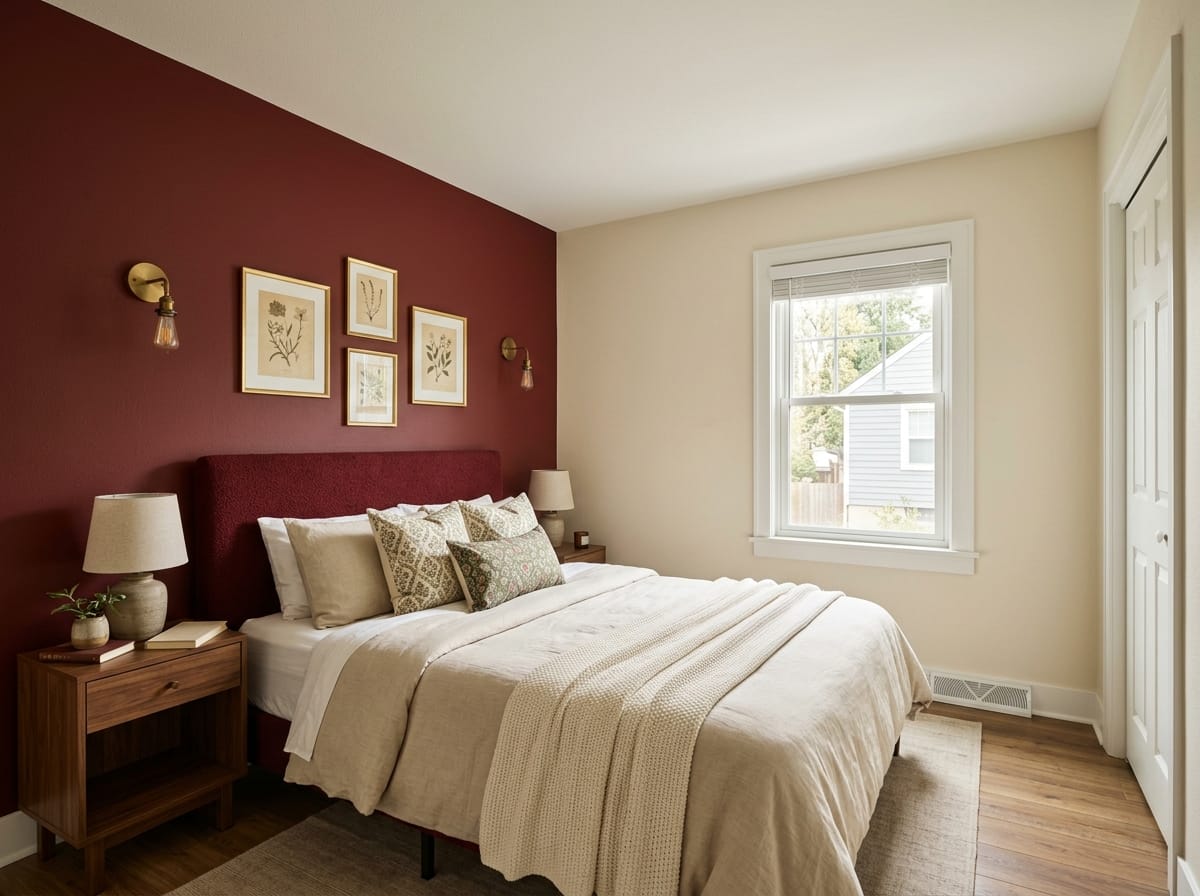
Oxblood and parchment
A deep red headboard wall against pale walls, brass sconces, botanical prints. The lighter route.
Make one like this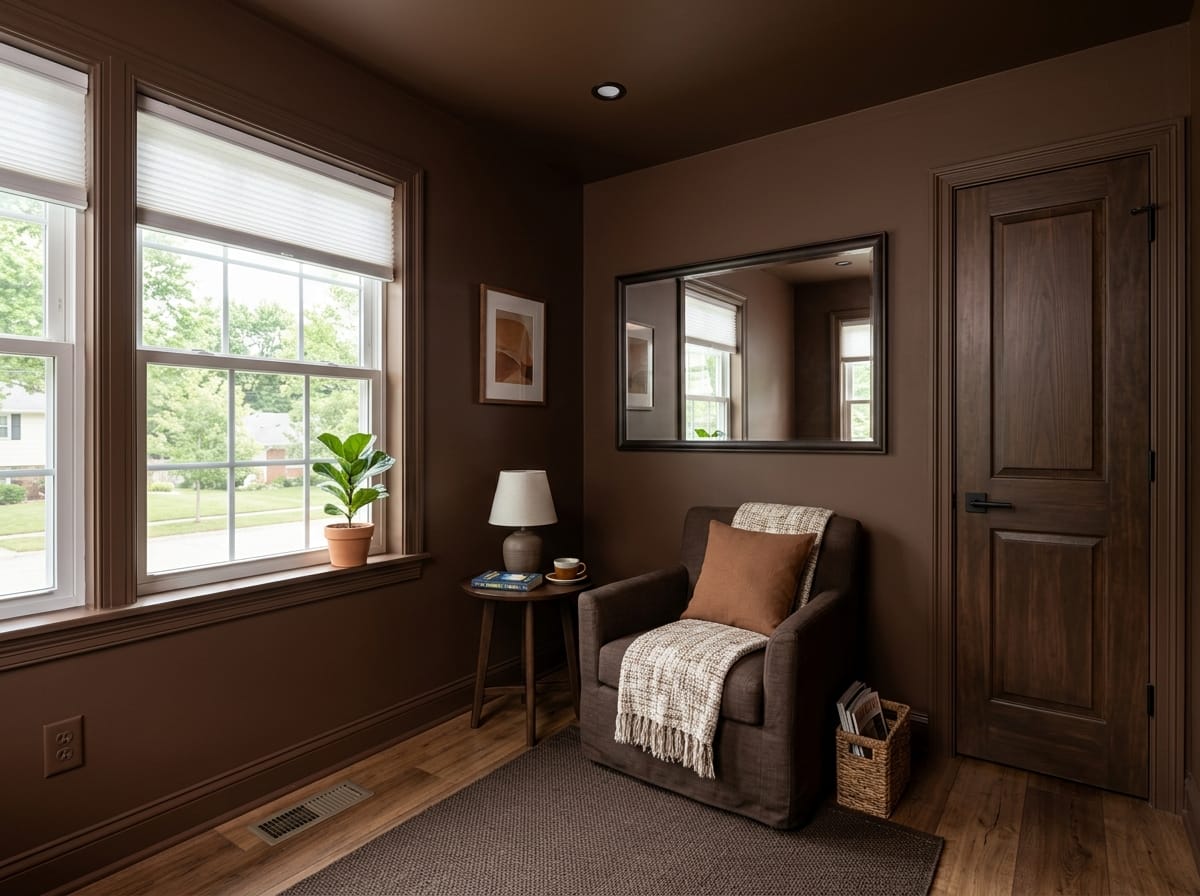
Small room, drenched in brown
Walls, trim and ceiling in one chocolate tone, a mirror facing the window. Under 100 sq ft and still not tight.
Make one like this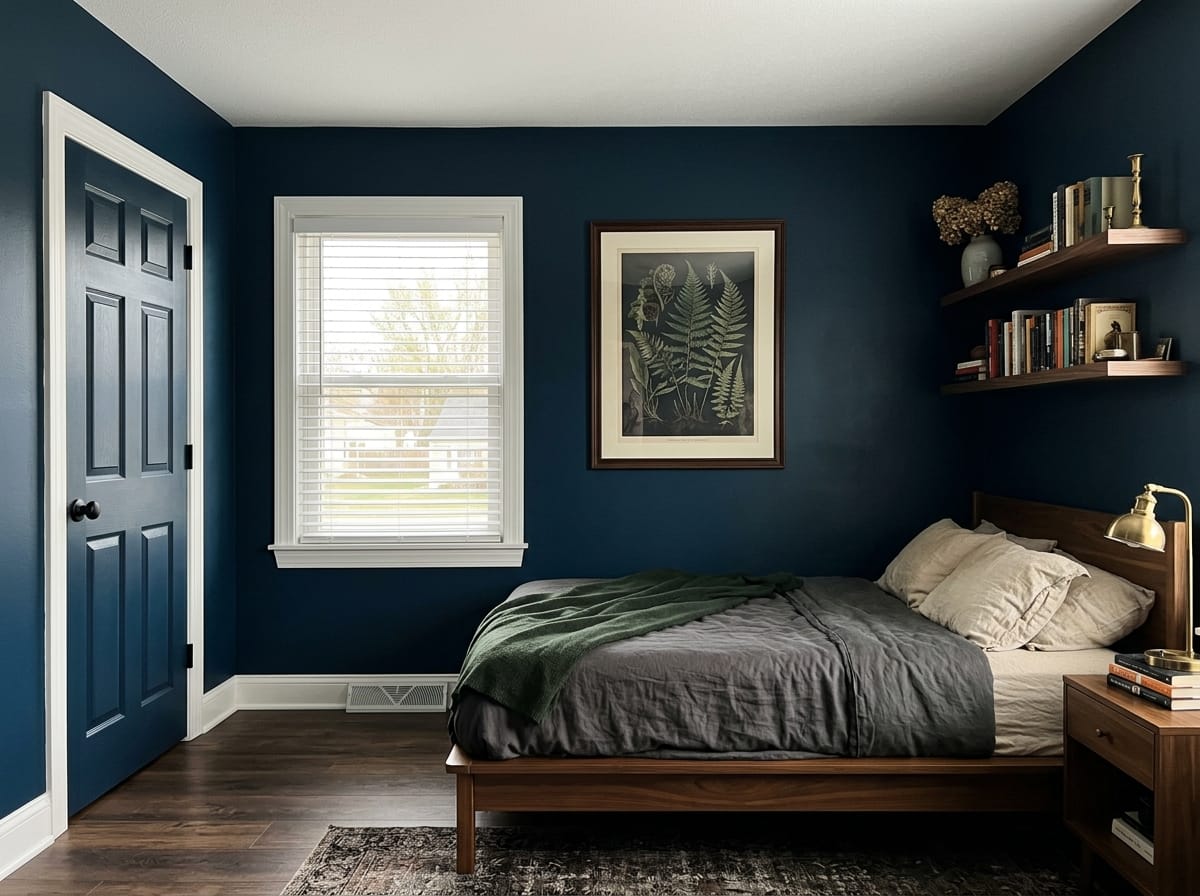
Modern dark academia
Ink walls, a low walnut platform bed, one large framed piece, two open shelves. Built for an 8 ft ceiling.
Make one like thisModern dark academia
Why the traditional version does not fit a new build
The traditional version needs old rooms - tall ceilings, deep casings, a fireplace. Most American apartments and new builds have 8 to 9 ft ceilings, flat drywall and narrow trim, so the style has to be edited there rather than copied.
What to keep and what to drop
The edit is simple. Keep the palette, the wood and the warm lamplight; drop the ornament. Flat-front walnut instead of carved antiques, one large framed piece instead of a gallery wall, two shelves of books instead of a full library wall, linen and wool instead of damask. It is also the practical route for renters: change every bulb to 2700K, add two lamps, and let textiles and books do the rest.
How to try dark academia on your own room
It runs in a browser on a laptop, tablet or phone, nothing to install. Two designs are free after signup, no card required.
Upload a photo or a floor plan
Shoot from the doorway so the window and as much wall as possible land in the frame - the render is built on your own photo, so the room stays recognisable. A floor plan also works.
Pick the style and name the specifics
There is no dark academia preset, so pick the closest style - British, Classic or Eclectic - and write the details in plain words: deep green matte walls, walnut furniture, brass lamps, faded red wool rug, shelves to the ceiling.
Compare colors, then fix single objects
Run the same room in green, oxblood and chocolate before buying paint. If one object comes out wrong, use the spot edit to replace that area instead of regenerating the frame.
What this costs in the US
Order-of-magnitude figures for one room, so you can see where an AI visualization sits. Rates vary by market; these are ranges, not quotes.
| Option | Typical price | Turnaround | What you get |
|---|---|---|---|
| Interior designer, full service | $2,000-$15,000 per project | Weeks to months | Design fee only - furniture, paint and labor on top |
| Online room design service | From about $199 per room | 5-10 days | One or two concepts from a remote designer |
| AI Neiroset | 2 free after signup, then paid packs | About 30 seconds each | Photorealistic renders of your room, spot edits, free 2D/3D planner |
How the packs work, and where we stop
You pay per render, in packs; current prices are on the pricing page. This is visualization only: no construction documents, no dimensioned working drawings, no electrical plans, nothing stamped.
Dark academia questions
What colors define dark academia interior design?
Can I use dark academia colors in a small room?
How do I get a dark academia bedroom without repainting?
What bed suits the style?
What does dark academia bedding look like?
What is modern dark academia?
How deep should dark academia bookshelves be?
Will a dark room feel depressing?
Can I see the style on a photo of my own room for free?
Are the images on this page real rooms?
See the style on your own walls
Compare deep green and oxblood in your actual room before buying a gallon of paint. Two designs are free after signup.
Try dark academia on my room