Exterior rendering - see your own house, redrawn from a photo
Two different products travel under the same word. One is a 3D model built from drawings, lit and photographed by a studio over several weeks. The other is what this page is about: a photograph of your house redrawn in a chosen style in seconds, made to settle a decision rather than to build from.
What an exterior rendering is, and which kind you need
Ask three people for an exterior rendering and you get three different products. An architect means a 3D model of the building, given materials, lit by a virtual sun and photographed by a virtual camera. A real estate agent means an image that makes a tired listing readable again. A homeowner usually means one thing only: show me my house in a different color and different siding before I commit to it.
The distinction decides what you should pay for. The wait and the bill attach to the first meaning, while most people only ever needed the third. If the shape of the house is not changing - same walls, same roofline, same windows in the same places - a modeled render is doing expensive work you will never look at.
One collision worth clearing up before anything else. Outside the US, render also names the cement coating troweled onto a wall, so searches about exterior render finishes are often about stucco and its texture, not about pictures at all. This page is about images of a house, not about coatings.
Who actually needs exterior renderings
Five situations that send people looking for one, and what each of them wants the image to do.
A homeowner about to spend on paint or siding
The exterior gets chosen once and then lives on the house for a decade or more. Seeing two finalists on your own walls, beside your own roof, settles more than an afternoon with color chips on the kitchen table.
An agent with a listing that has gone quiet
The house is dated rather than bad, and every showing ends the same way. A render turns the conversation from another price cut into what this property could be. Listing photos come with labeling duties - there is a section on that below.
A contractor who needs the client to see it first
Clients change their minds once the siding is on the wall. A picture both sides looked at beforehand is cheaper than a change order and easier to point at than a line of description in an estimate.
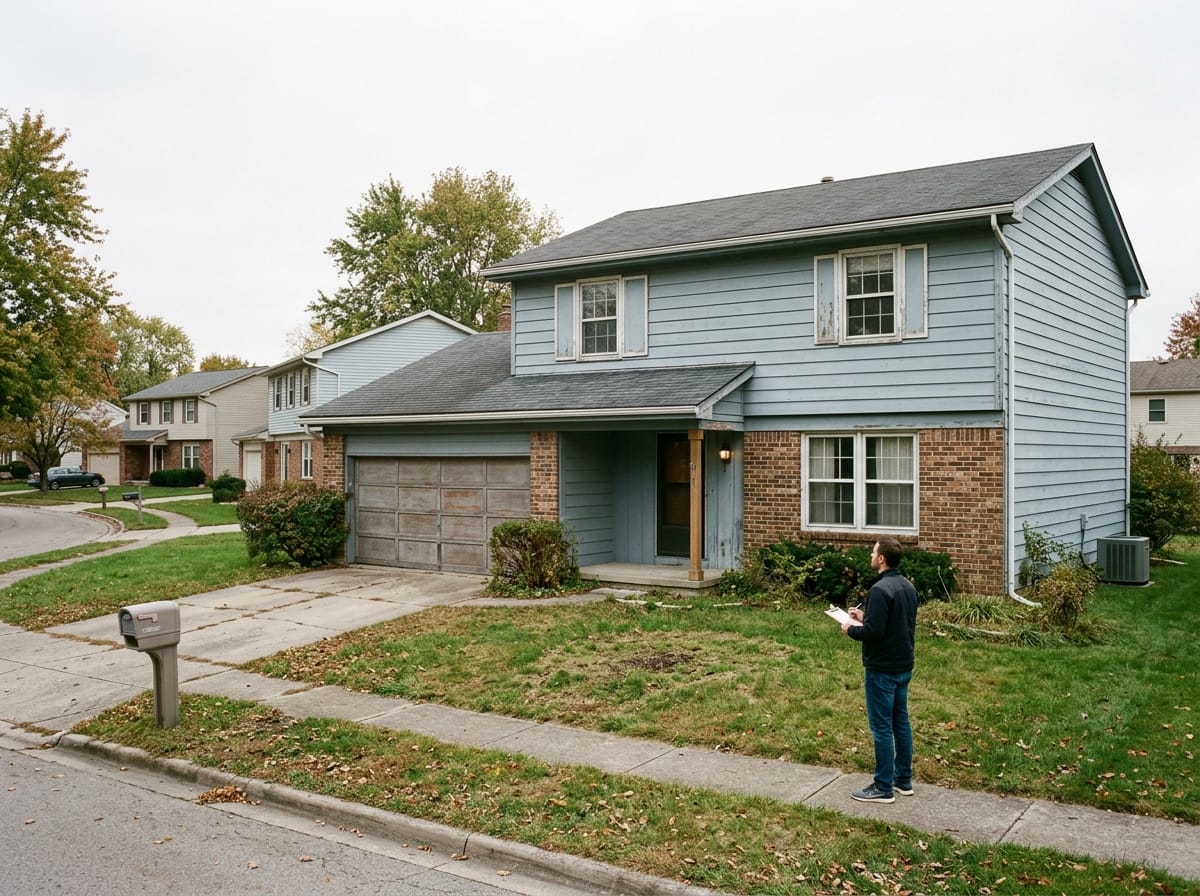
A buyer standing in front of a fixer-upper
The decision happens before the offer, not after closing. It is hard to bid with any confidence on a house you can only picture the way it looks today, under the previous owner's choices.
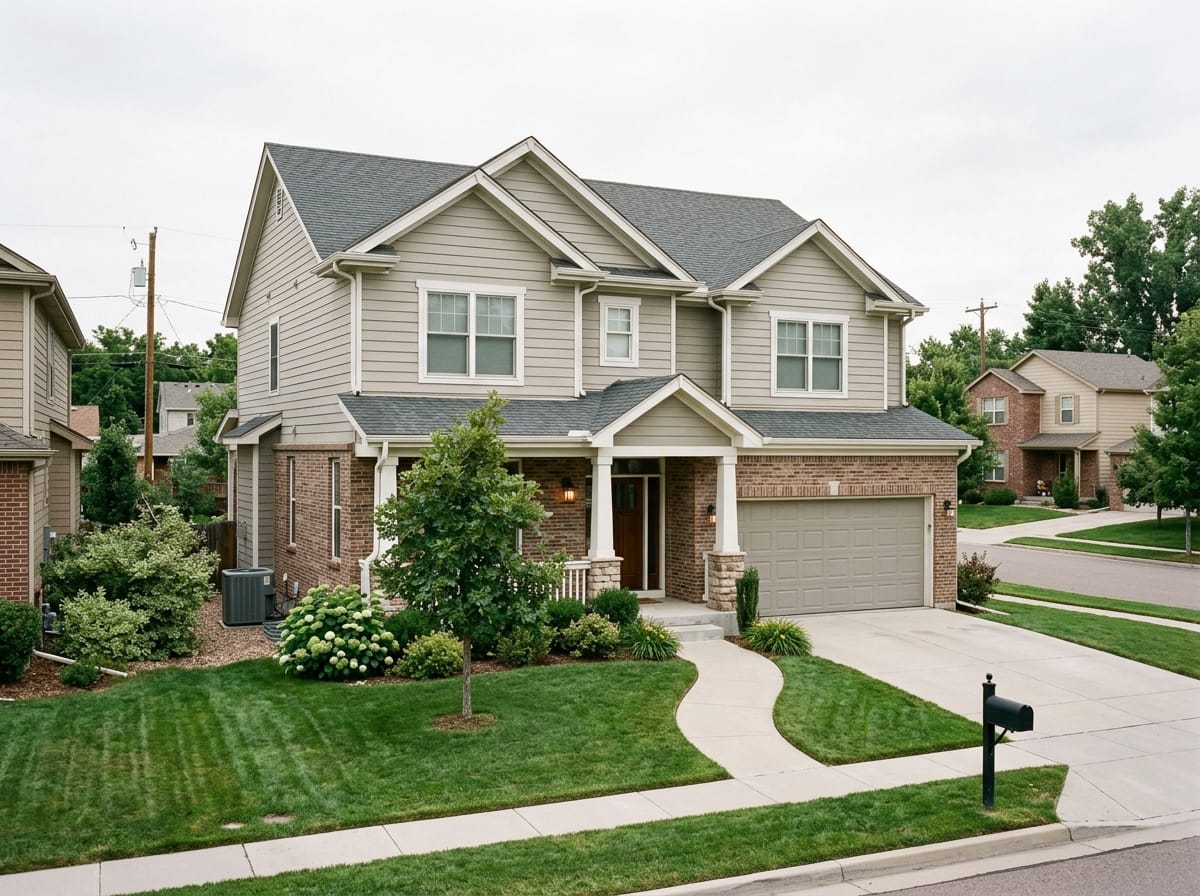
A household that cannot agree
Two people saying warm gray are describing two different houses, and the argument runs on words because nobody has seen anything. Put both versions on a screen and it takes a minute instead of a month.
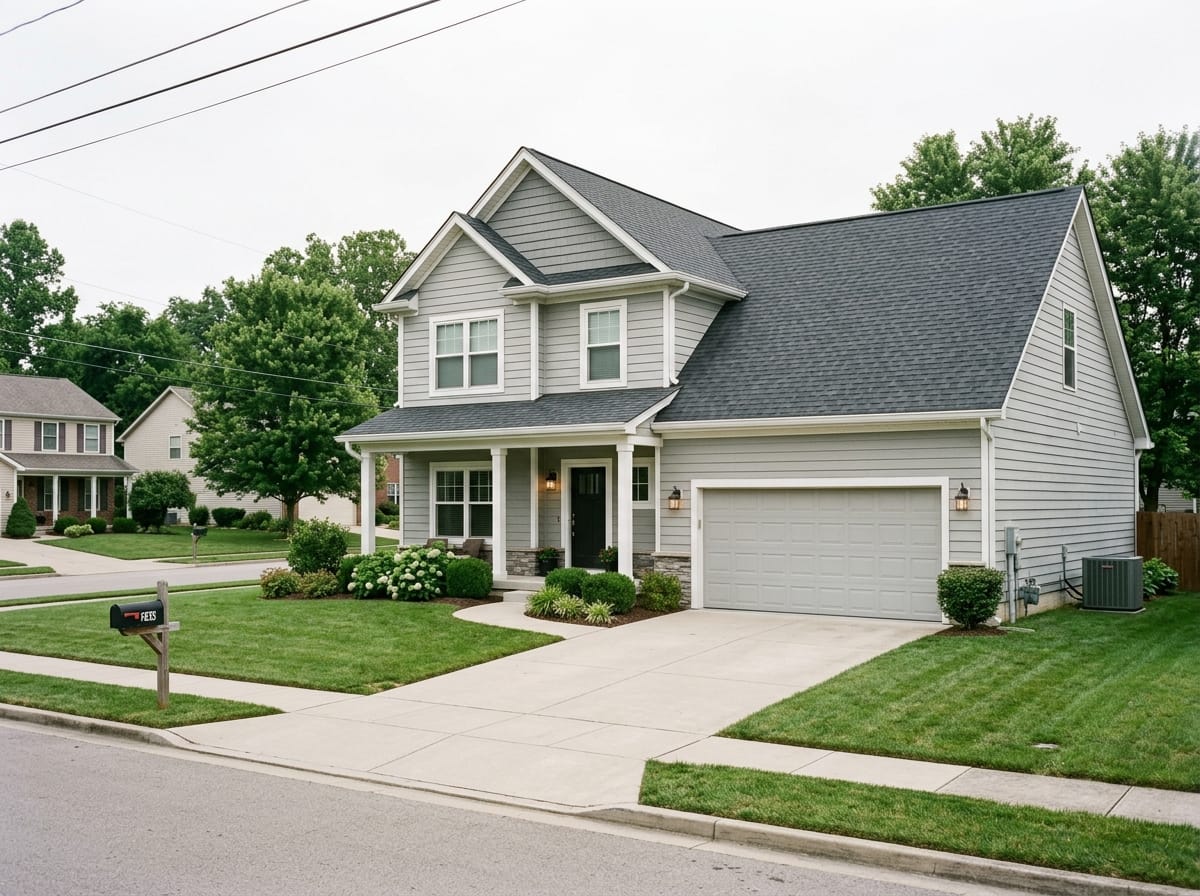
Anyone gathering quotes
Sending the same image to three contractors means three prices for the same job. Describing the job in a paragraph means three prices for three different jobs.
How a real 3D exterior house rendering is made
This is the professional product, described plainly so you can recognize when you genuinely need it. We do not produce it, and the rest of this page explains what we do instead.
Someone builds the house in three dimensions before a single image exists. Wall planes, roof pitches, the depth of the overhang, the reveal around each window, the step of the foundation - all of it from a drawing set or a field measurement. This stage takes the longest and produces nothing you can look at.
- Built from drawings or a measured survey, not from a snapshot
- Wrong dimensions going in means a confident, wrong picture coming out
- Nothing is visible to the client until this part is finished
When this is the right thing to buy
A modeled render earns its keep when the building does not exist yet, when the volume is changing, when you need several camera angles of the same design, or when the picture has to agree with a drawing set someone will build from.
What this tool does instead
A photograph of your house, redrawn
You upload a street photo of the house. What comes back is that same frame - your roofline, your window layout, your driveway, the same angle you were standing at - wearing a different exterior. It takes seconds, and because it takes seconds you can look at a direction, dislike it, and look at another one before you have finished your coffee.
That speed is the whole point. The value is not that one image is beautiful; it is that you can compare four of them and find out that the thing you were certain about for a month does not suit your house at all.
What it is not
It is not a project and not a drawing set. It is not an estimate - no quantities, no material list, no prices sit behind the picture. And it is not a model: there is no geometry underneath, so there is no camera to move and nothing to spin around.
- No 3D model, no orbit, no flythrough, no aerial view
- No wall thicknesses, no details, no material schedule
- No quantities and nothing a supplier can price from
- Nothing to hand a permitting office or a review committee
When a photo is enough, and when it is not
The honest split, so you do not spend weeks on something a photo would have answered, or an afternoon on something it never could.
| What you want to see | A redrawn photo | A modeled 3D rendering |
|---|---|---|
| New color, new siding, new trim on the house you already own | Yes - this is exactly the job | Overkill for the question |
| A different front door, shutters, entry treatment, exterior lighting | Yes, inside the frame you shot | Overkill unless the structure moves |
| How dark the house can go before it looks heavy | Yes, and quickly, because you can compare runs | Yes, one variation at a time |
| An addition, a dormer, a second story, a raised roof | No - the shape of the house cannot change | Yes |
| A porch or a garage that does not exist yet, at real dimensions | No | Yes |
| A house on an empty lot | No - there is nothing to photograph | Yes |
| An angle you never shot, an aerial, a walk around the building | No | Yes |
| Something to submit for a permit or an architectural review | No | Ask the professional who stamps the drawings |
Where we stop
If the volume of the building changes, or if a reviewing body has to receive the result, this is the wrong tool and it is better to hear that now. That work belongs to a designer or an architect. A redrawn photo can still help them - it is a clear brief of what you are after - but it is the start of their job, not a substitute for it.
What you control, and what you cannot
The blunt part first, because everything else on the page depends on it: there is no wish list field. Nothing on the screen accepts a sentence, a color code, or the name of a material. You are choosing between prepared directions, not writing a brief.
- The photo you upload — By far the biggest lever you have. Angle, light and what is in the frame decide more about the result than anything else, which is why the next section is entirely about the ten minutes you spend outside.
- Up to two styles per run — Ten tiles: Minimalism, Classic, Scandi, Neoclassical, Loft, Contemporary, Black-tech, High-tech, Chalet, Barnhouse. Each carries its own palette and material logic. Two at most in one run - for more directions you run the same photo again.
- Repetition — Same photo, different tiles, as many runs as you have generations for. Comparing directions is what this is good at; a single image in isolation tells you much less than three images side by side.
- The resolution you download — Standard comes out at 1024 px on the long side and Pro at 2048. The larger file is the one to keep if the picture is going in front of a contractor or into a presentation.
- What you cannot do: describe it — There is no text box anywhere in the flow. You cannot ask for a specific shade, name a siding profile, say keep my shutters, or say remove the satellite dish. If a style brings something you did not want, the answer is a different style and another run - not a sentence.
The workaround is the camera
Anything you want out of the picture has to leave the frame in person. Move the car, close the garage door, roll the trash cans back, coil the hose. You cannot ask for them to be removed afterward, so the cleanup happens before you press the shutter.
How to shoot the photo the rendering is built from
Ten minutes outside changes the result more than any tile does. Every item here costs nothing and cannot be fixed later.
Stand across the street
Back up until the whole house sits comfortably in the frame with a strip of ground in front of it. From the end of the driveway you photograph the front door. From the far sidewalk you photograph the house, which is what you are trying to redraw.
Straight on, or from a shallow corner
A straight-on frame reads like an elevation and is the easiest thing to compare between runs, because nothing shifts but the finish. A corner that catches two walls shows the depth of the building. If you have the time, shoot both.
Camera level, about chest height
Tilting up makes the walls lean and the roof loom over the house. Shooting from a crouch flattens a single-story house into something squat. Hold the phone straight and let your feet do the framing.
Overcast, or the soft hour
Flat light shows the walls as they are. Hard midday sun cuts black shade under the eaves and along the porch, and a backlit house is a silhouette - there is nothing in the shadow for anything to redraw.
The whole roof in the frame
From the street the roof is a large share of what anyone sees, and it is the thing a new exterior has to sit next to. A cropped ridge leaves the redraw guessing at the biggest surface on the house.
Clear the frame first
Move the car off the driveway, close the garage, put the trash cans and the ladder away. Whatever is in the photo stays in the photo, and a car in front of the entry hides the part you care about most.
Check the file before you upload
JPG, PNG and WEBP up to 10 MB are accepted. HEIC straight off an iPhone is not - convert it, or set the camera format to Most Compatible before you go outside.
What survives the redraw, and what does not
What stays
The outline of the house is the anchor of the whole thing. The roofline and its pitch, the wall planes, the number of stories, where the windows and the door sit and how large they are - those carry through, which is why the result still reads as your address rather than as a house from a brochure. That recognition is the entire reason to start from a photograph.
The camera stays as well. You get the view you were standing at, in the proportions your lens gave it.
- Silhouette, roof pitch and the number of stories
- Window and door positions, and the proportions of the openings
- Your camera angle and framing
What the redraw touches
Everything that is surface. Siding and the direction it runs, masonry, color, trim, the treatment around the entry, railings and the quality of the light in the frame.
And more than people expect. The pass covers the whole image, not a masked-out house, so the neighbor's roof, the fence, the power lines, the parked truck down the block and the tree in the yard come back redrawn too. Nothing in the frame is protected, which is another reason to get the frame right before uploading.
- Surfaces, color, trim, railings and the entry
- Sky, season and the character of the light
- Neighbors, wires, fences and planting - redrawn, not preserved
Angles: the real limit of a photo-based rendering
A studio can put the camera anywhere, including places that do not exist yet. Here the camera is wherever you were standing, and planning around that is most of the skill.
Each run redraws one frame. Front and side means two photos and two runs, and the two results are not linked: the same style tile gives the same direction, but the details will not match seam for seam between them. Use them as two views of one idea, not as a matched set from a drawing package.
What a redrawn exterior looks like
Model-generated reference frames rather than photographs of finished houses. They are here to show how far a single tile moves a given house, and how much of the original survives.
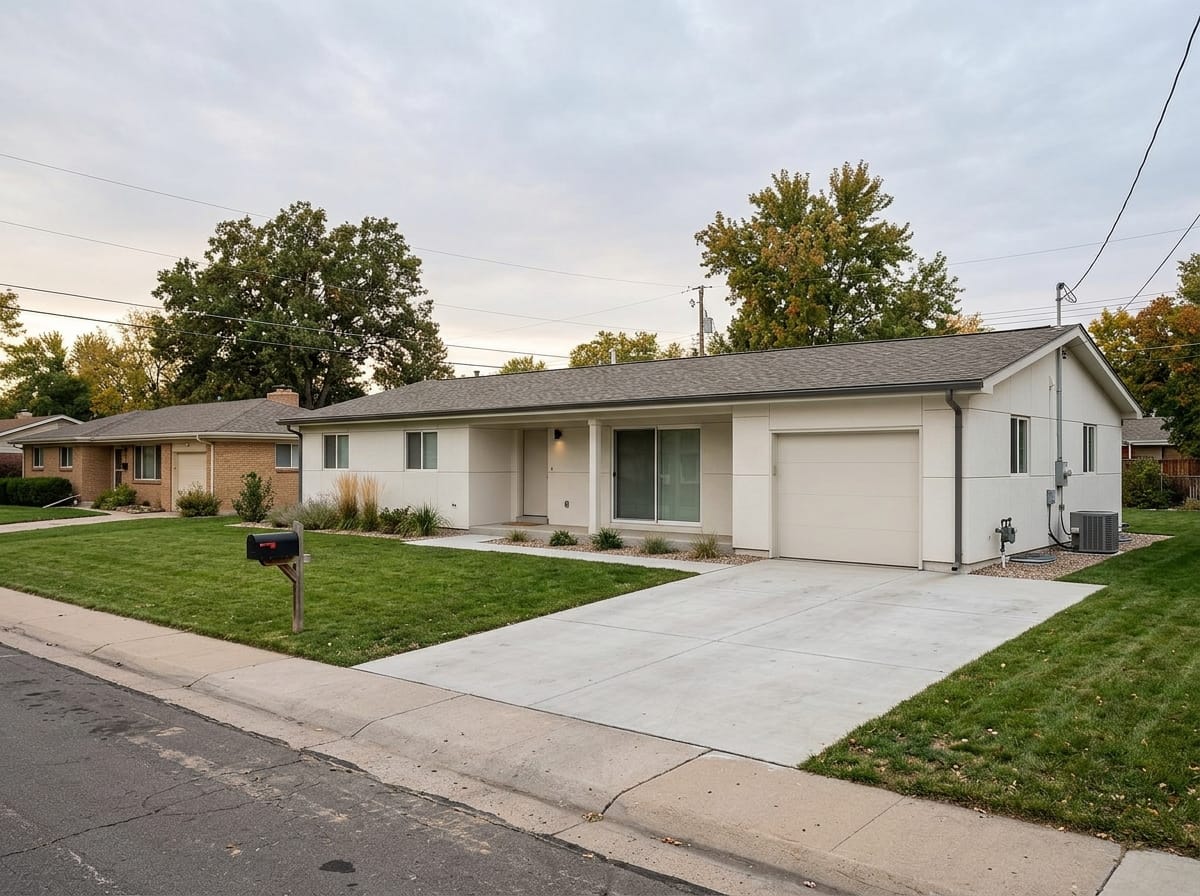
Minimalism on a ranch
Long low house, plain wall planes, a flat palette and the trim reduced to almost nothing. The shape is unchanged - what moves is how busy the house looks from the street.
Make one like this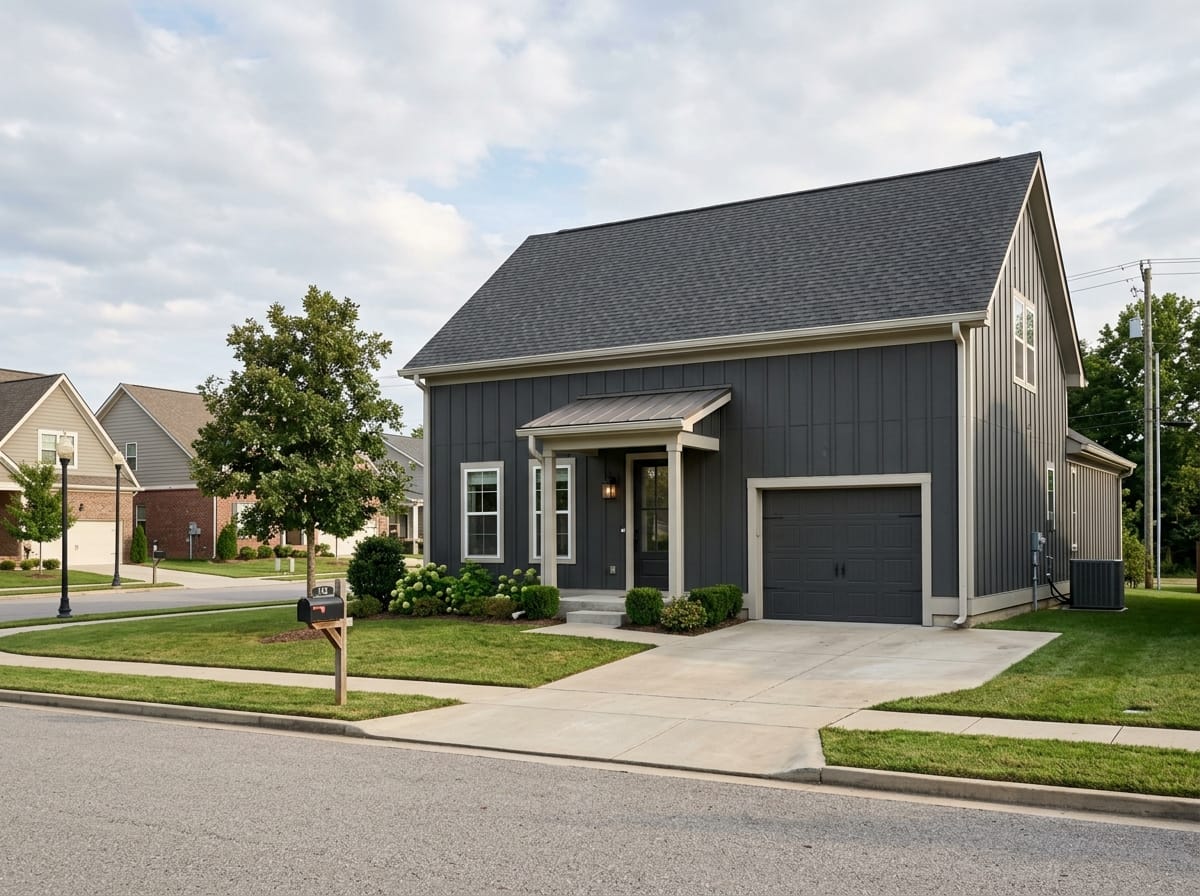
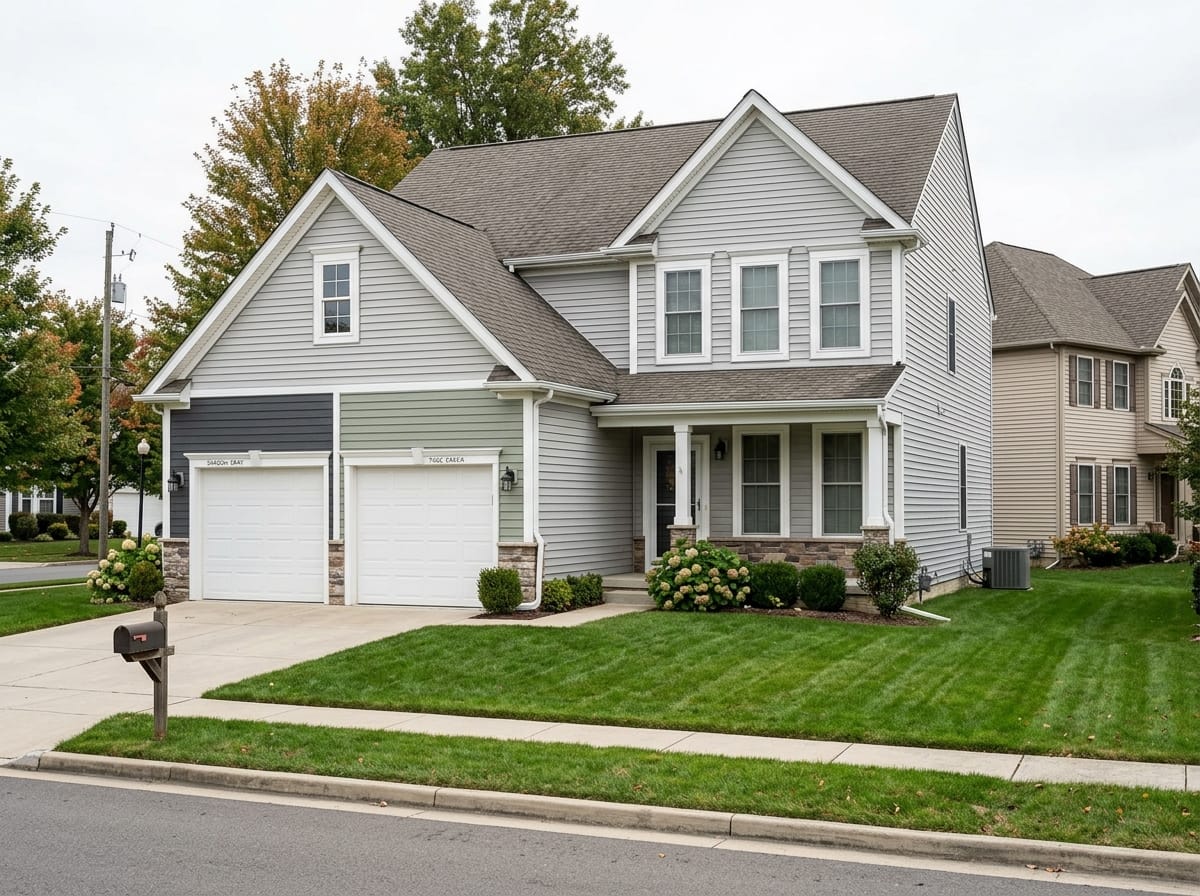
Barnhouse on a simple gable
Vertical boards, dark body, a light frame around the openings. The most forgiving direction for a plain gable-roofed house with nothing much going on.
Make one like this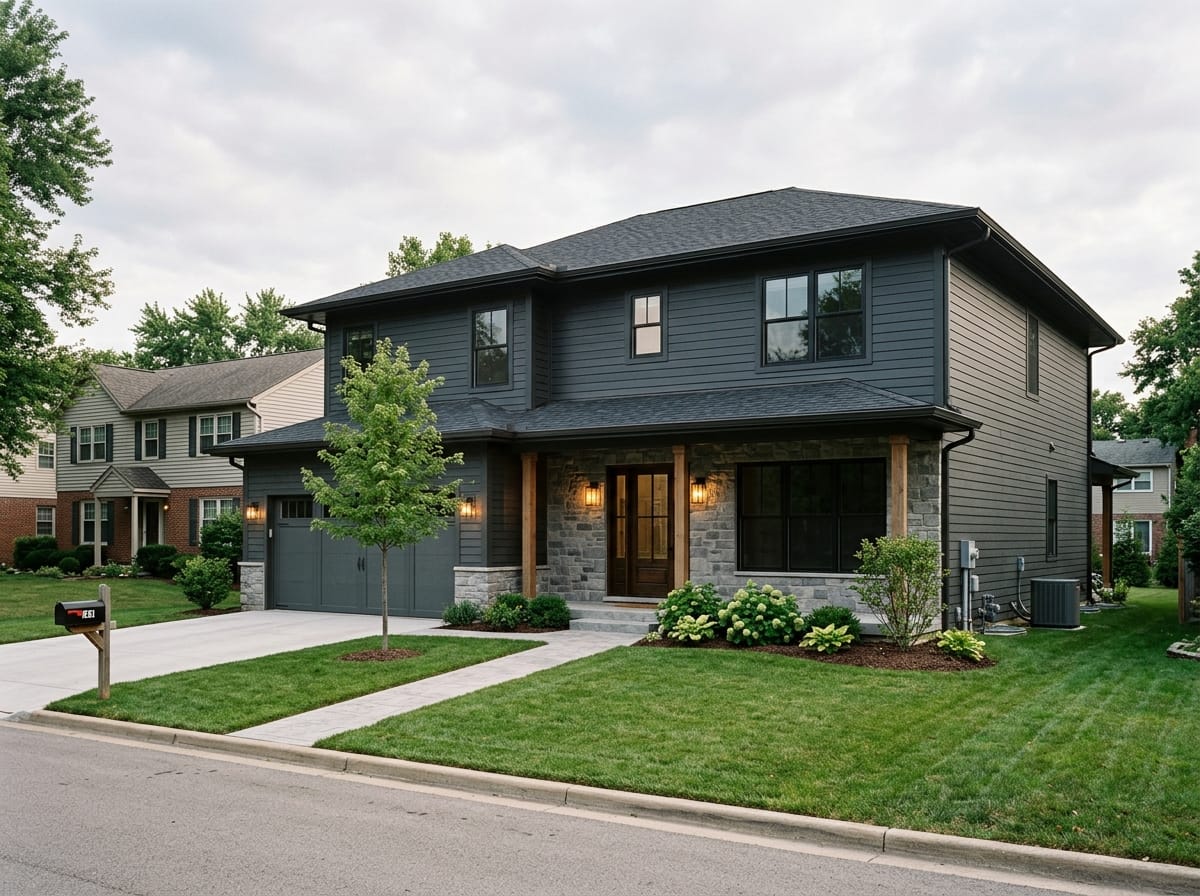
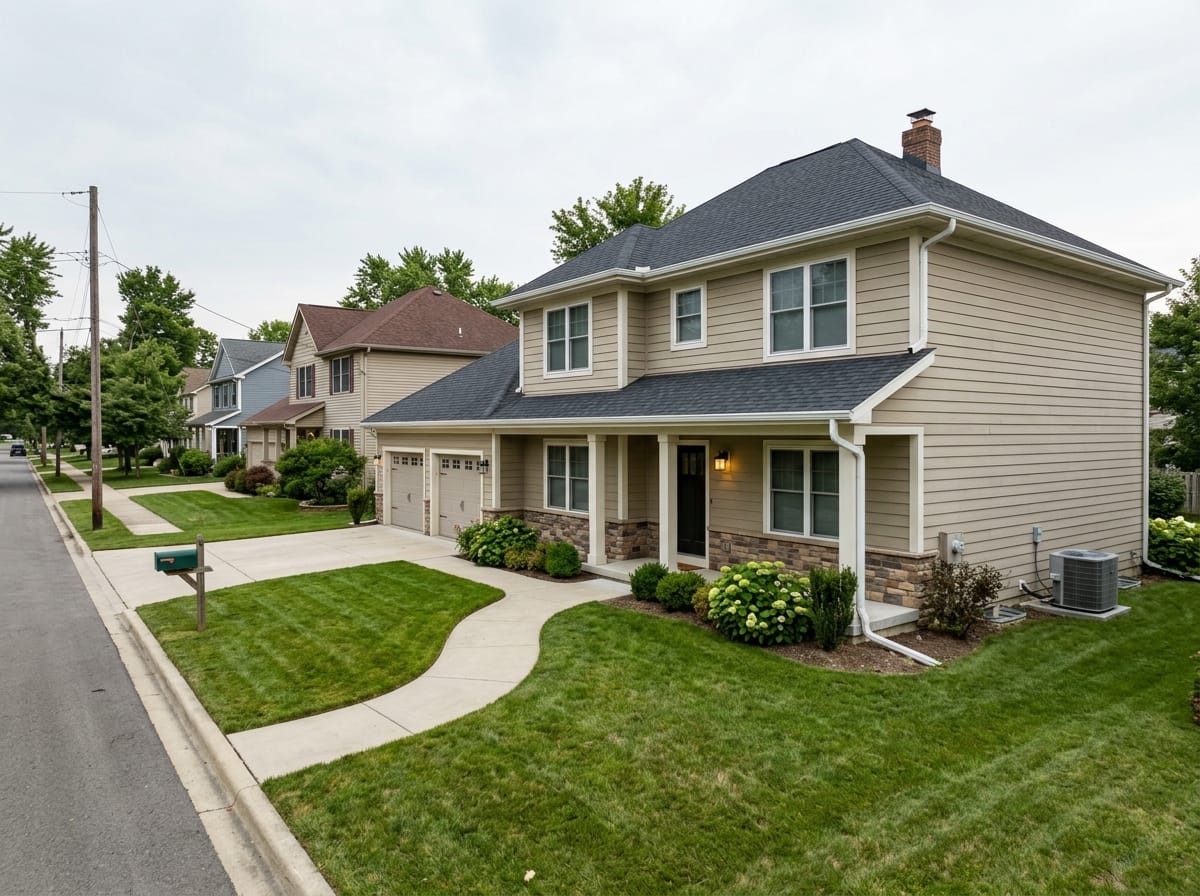
Contemporary on a two-story
Two materials split by level, larger glazed areas read as darker openings, a defined entry. Two-story houses take contrast better than low ones do.
Make one like this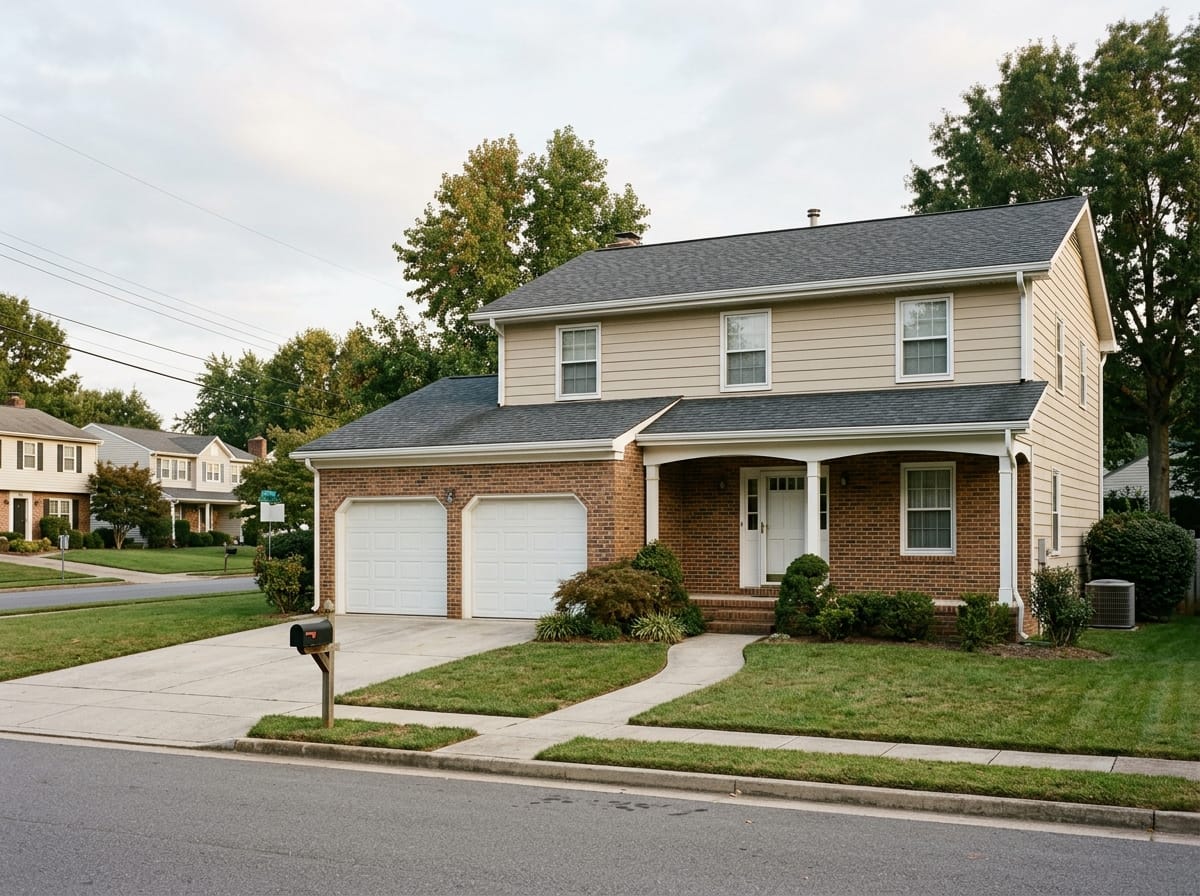
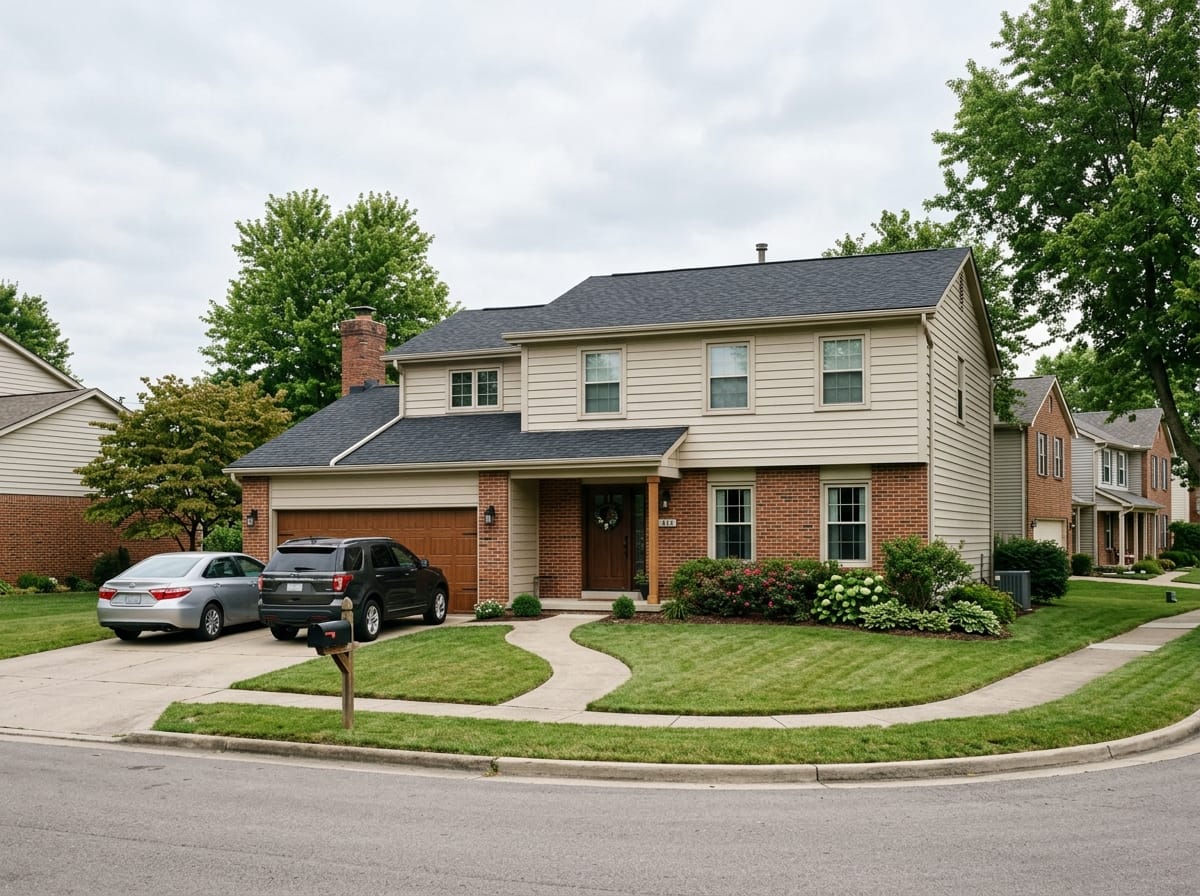
Classic over a brick front
Masonry left as the base note, painted body above, heavier casings and a symmetrical entry. The direction to try when you are not touching the brick.
Make one like this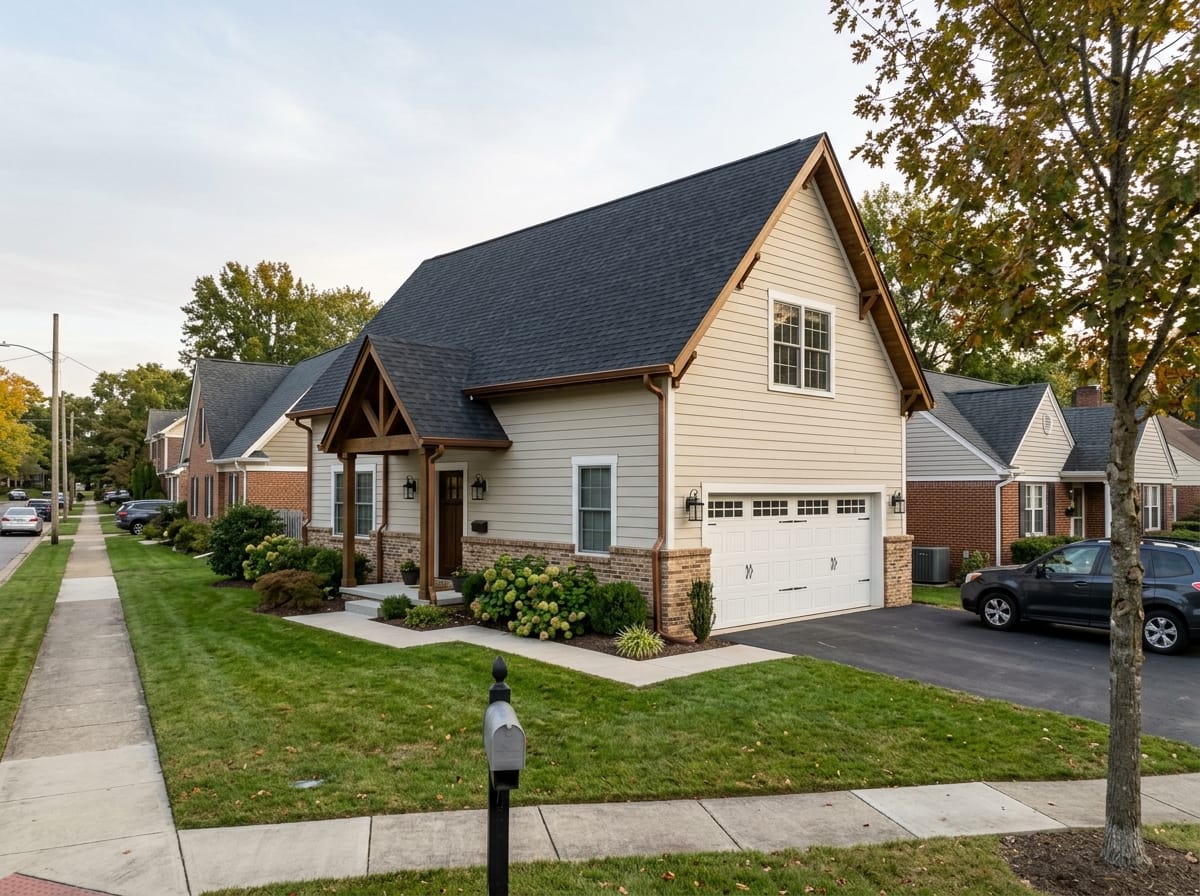
Chalet on a steep roof
Wood, deep eaves, a heavy base. It needs a roof pitch to work with - on a low-sloped house the same tile lands as costume rather than architecture.
Make one like thisHow to get an exterior rendering in three steps
It runs in a browser on a phone or a laptop, with nothing to install. Signing in is required, and the design branch - exteriors, interiors and landscape - carries its own two free generations on the account, separate from the simple generators.
Upload the street photo
The frame from the section above: whole house, level camera, soft light, roof included, driveway clear. JPG, PNG or WEBP up to 10 MB, and not HEIC. An older house under consideration and a freshly built shell both work - what matters is that the walls are visible.
Pick up to two of the ten styles
Minimalism, Classic, Scandi, Neoclassical, Loft, Contemporary, Black-tech, High-tech, Chalet, Barnhouse, shown as tiles. Two per run at most. There is no field to describe anything, so this choice is the whole brief - pick the two directions furthest apart rather than two neighbors, and learn more from the comparison.
Download, then run it again
The result is your own house in a different exterior. Download is open right away - Standard at 1024 px on the long side, Pro at 2048. Then send the same photo through another pair of tiles: a decision comes from three or four frames side by side, not from the first pretty one.
Hold the photo constant
Compare runs from one source frame. Change the photo and the style at the same time and you no longer know which of the two made the difference, which is the quickest way to spend a set of generations and learn nothing.
Try it on the house you actually own
Every point above is easier to judge on your own address than on an example. Two generations are free on the account after signing in, and the result comes back in seconds.
Try it on the house you actually own
Every point above is easier to judge on your own address than on an example. Two generations are free on the account after signing in, and the result comes back in seconds.
What every exterior rendering flatters
True of a studio frame and true of ours. Knowing the list is what keeps you from feeling cheated on the day the scaffolding comes down.
- The service parts go missing — Downspouts, gutter seams, the electric meter, the hose bib, the AC condenser, the dryer vent, the cable entry. Renderings rarely show them. The house shows all of them, usually on the wall you were admiring in the picture.
- Geometry is cleaner than the trade — In an image the courses are even, the joints line up and nothing is out of plumb. Real siding is installed with a tolerance, and real stucco has a hand behind it. The picture sets the intent, not the standard of work.
- Texture is exaggerated — Wood grain, stucco tooth and mortar joints read at a scale you would only see standing at the wall. From the sidewalk the same surface is calmer and flatter than any rendering of it.
- The weather is chosen — Renderings live in the kindest twenty minutes of the year. Your house also has a flat February afternoon, and a color that only holds up at golden hour is a color that disappoints for most of the year.
- The surroundings get tidied — Lawn even, no boat next door, no trash day, no dead branch over the roof. This matters more than it sounds, because a lot of what people read as the house is really the twenty feet around it.
- Dusk frames sell the hardest — Warm windows against a dark sky make any house look more expensive than it is. Look at a plain daylight frame before you decide anything, and treat the evening version as the poster rather than the evidence.
What to do with the rendering once you have it
The image does not paint anything and does not order anything. These are the jobs it is genuinely good at.
- Show the contractor before the estimate — One picture in front of both of you removes most of the vocabulary problem. What you call a warm taupe and what the crew calls a warm taupe stop being the same conversation once there is something to point at.
- Settle it at home — Put two runs side by side on a laptop. Families argue about adjectives for weeks and about images for about five minutes, and the version everyone quietly liked usually wins on sight.
- Attach it to a request for a quote — Contractors read a picture faster than a paragraph, and three of them pricing the same picture gives you three comparable numbers. It sets the scope, not the price, and it commits nobody to anything.
- Confirm the actual shade on the wall — A screen emits light and a wall reflects it, so no image settles a specific color. The render picks the direction; sample patches on two sides of the house, looked at morning and midday, settle the shade. The color page goes through that properly.
- Keep the original photo next to the result — Save the unedited file in the same folder. It is the fastest way to show anyone - a contractor, a neighbor, a buyer - exactly what is real today and what is a proposal.
Three things not to do with it
Do not pass it off as a project or a construction document - there is nothing behind the image, no dimensions and no details. Do not submit it to a permitting office or an architectural review committee in place of drawings. And if the house is for sale, an altered photo has to be recognizable as altered: label it, keep the original file, and check the rules your MLS and your portals apply, because we do not add any disclosure to the image and we do not interpret those rules for you.
Studio, model it yourself, or redraw a photo
Three routes to seeing your exterior in advance, compared on what they ask of you and what you end up holding.
| Criterion | Rendering studio | Modeling it yourself | Redrawing a photo here |
|---|---|---|---|
| Time to the first image | Weeks, including the back and forth | Weeks of learning before the first usable frame | Seconds |
| What you have to supply | Drawings or a measured survey | Dimensions, plus the modeling and a machine that can render | One photo of the house |
| Skill required | None - you are hiring it | Substantial, and it does not carry over from other software | None |
| Whose house you see | Yours, rebuilt from the measurements you provided | Yours, as accurately as you modeled it | Yours, from your own photograph |
| Camera angles | Any, including views that do not exist yet | Any | Only the frames you shot |
| Changing the shape of the building | Yes | Yes | No |
| One more variation | A new order and another wait | Another evening of your own | Another run, seconds later |
| What you end up holding | A finished image set, and the scene file if the contract says so | A model you own and can revise next year | An image for a decision and a conversation |
Said plainly
We redraw the photograph you upload. We do not build a 3D model of your house, we do not move the camera, we do not take a sentence describing what you want, and we do not issue anything a builder can work from. When a project needs those, this is the wrong tool, and it is better to know that before you spend an afternoon here.
Exterior rendering questions
What is an exterior rendering?
Can I get a 3D exterior house rendering here?
Can I do 3D house exterior design online for free?
Does exterior render mean stucco or a picture?
Can I type what I want changed?
Will the house still look like my house?
What kind of photo should I upload?
How many angles can I do?
Can I use the image in a real estate listing?
Can I give it to my contractor or submit it for a permit?
Start with one photo from across the street
Whole house in frame, soft light, driveway clear. Pick two of the ten styles and see your own address in a different exterior in seconds - two generations are free on the account after signing in.
Render my house from a photo